
Tag: 19th century vampires

  • What’s Next?

    What’s Next?

    This has been one of the most frequently asked questions recently. Yes, I am working on my next novel. I don’t like to talk much about ongoing projects but there are a few things I can share…

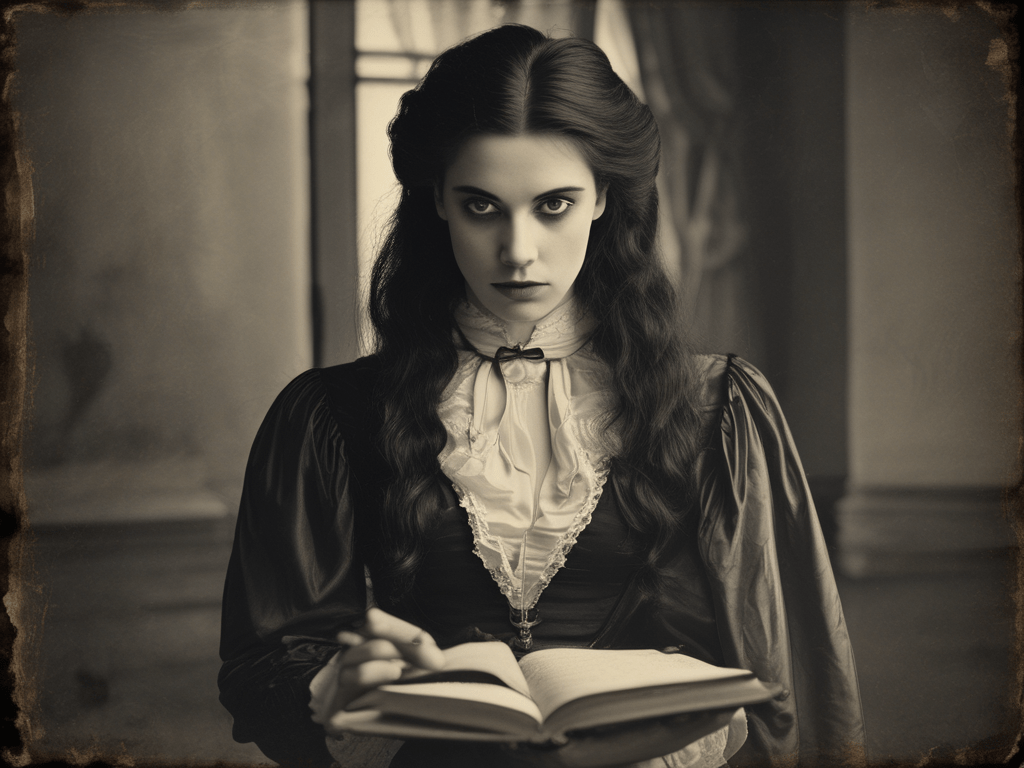
    The new novel will be a spin-off of Journals of the Undead and will focus on Beatrice. As I’ve mentioned before, she was supposed to be the female lead in my debut novel, however, life (and Lucretia) had other plans. I always felt bad about that so now I shall use the opportunity to rectify things.

    Unlike JotU, the spin-off will be set entirely in the 19th century, apart from the occasional flashback. Readers of my debut novel said that they loved the stories but thought that covering four centuries in 12 short stories was too much and I agree with them.

    The novel will show Beatrice’s life as a vampire at a particular point of her life, reveal how she became a vampire and tell what her human life was like. It will feature a few vampires from JotU, as well as introduce some new characters.

    I love mixing real life with fiction, so expect historical facts woven into the story. Some of the plot is inspired by real events.

    When will the novel be available to buy? Best case scenario, Autumn 2025 for the Latvian version and Autumn/Winter 2026 for the English edition. This time I want to write in both languages simultaneously as opposed to translating the Latvian manuscript like I did with Journals of the Undead.
  • The Black Vampyre & Carmilla

    The Black Vampyre & Carmilla

    I never run out of books to read. In fact, I have 50+ unread books at the moment on my shelves, but that doesn’t stop me from buying some more. The latest additions are two 19th century vampire stories: Sheridan Le Fanu’s Carmilla and Uriah Derick D’Arcy’s The Black Vampyre.

    I chose them because I’m working on my next vampire novels that are set in the 19th century and reading books from that historical period helps me get into the mood. I also pay close attention to the language, to how people addressed each other and how they described the world around them. Whilst I don’t want to sound like a 19th century author, I don’t want to sound too modern either.

    I haven’t started reading Carmilla so I cannot provide any feedback at the moment. I chose it because this 1870s novel inspired Dracula and the vampire is female.

    The Black Vampyre (1819) I have read. It sounded very promising: the first black vampire story and the first comedic vampire story that also had a revolution going on in the background. The main character is a slave who transforms into a vampire after being killed by his captor and seeks revenge. So far, very promising. Yet I was left with mixed feelings. The plot summary was better written than the story, in my opinion. If I were reading this in the 1820s then I would have been excited for this was an entirely new genre and I love a good revenge story. However, I was reading this as a modern reader (that is difficult to surprise). The author (whose true identity remains unclear) wrote the Black Vampyre as a response to John William Polidori’s The Vampyre. Polidori’s story became a sensation and what usually happens when something becomes a sensation? Many others try to create something similar. Personally, I found the language in The Black Vampyre difficult to follow but maybe that’s because it’s written in English as it was spoken in the United States 200 years ago. Overall, it was an interesting reading experience.

    I’m also planning to read The Pale Lady by Alexandre Dumas père. I had no idea that the author of The Musketeers and The Count of Monte Cristo had also written a vampire story!