Tag: the undead

  • My Storytelling Mistakes: Avoiding Foreshadowing

    My Storytelling Mistakes: Avoiding Foreshadowing

    I’ve made quite a few mistakes as an author. When I was working on Journals of the Undead, I liked the idea of surprise. Giving my reader a clue, foreshadowing things? Nah, it’s more fun to introduce something new without any warning!

    I wouldn’t do it again. It works for some authors but I’ve grown to appreciate the beauty of clues, suggestions, little touches that might seem insignificant at first but make sense in hindsight and make me admire the level of thought and effort put into that story. The first example, which is also one of the best examples, that comes to my mind is Breaking Bad, one of my favourite TV shows. Better Call Saul, except for some weird filler episodes and several characters acting out of character on occasion, was also very enjoyable to watch. The level of detail in both shows is insane, the way it all weaves together… There were a lot of things I didn’t even notice until I started watching YouTube shorts and reading comments!

    And you know what, that was one of the reasons why I decided to start telling my own stories differently. I don’t want them to be too predictable but I do want them to become smoother and use “and because of…” instead of “and so…”. A story needs to flow, even I, the author, cannot just take it in any direction I want it to go. A story needs to make sense not just to me but also to the reader.
  • Mina Harker

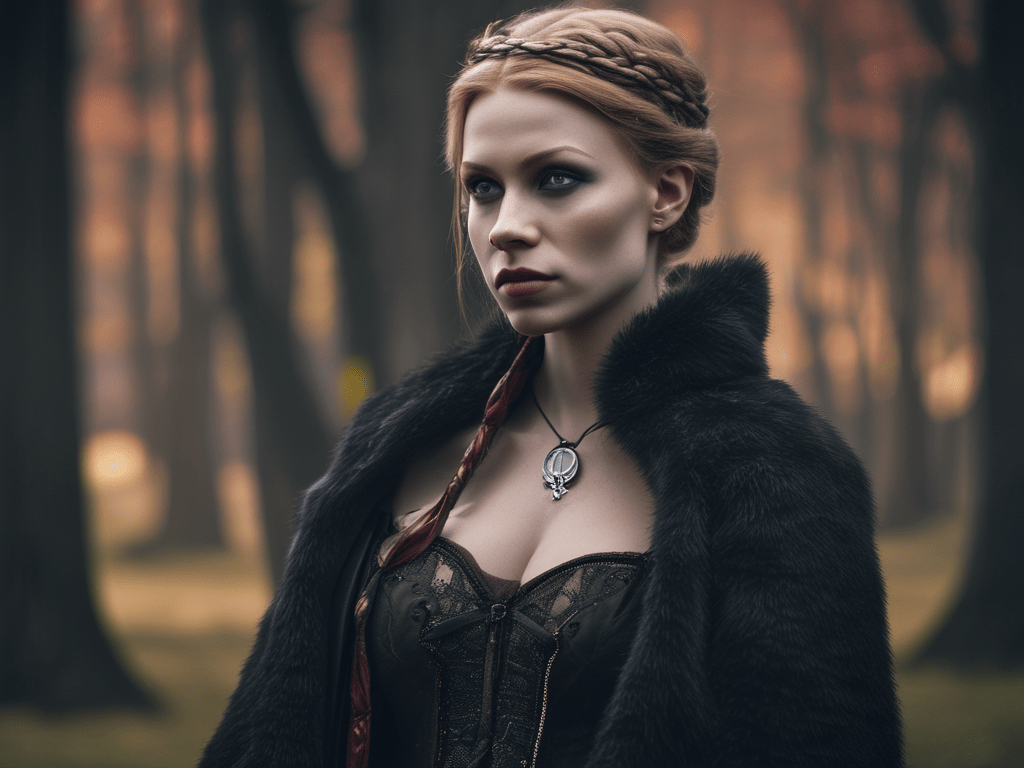
    Out of all Mina Harker’s I’ve seen, there’s only one I like: Peta Wilson’s Mina in The League of Extraordinary Gentlemen. The worst one, in my opinion, was Helen Chandler’s Mina in Dracula (1931). Bela Lugosi was superb in his role and that’s why his Count Dracula is iconic. As for Mina… She was reduced to a mere background character – shame on you, script writers.

    If you’ve read Bram Stoker’s novel then you know what Mina was like: she was written as a strong character and played an important role in tracking down Dracula. Without her contribution, the others wouldn’t have found him when Dracula fled London. Stoker wrote her as a woman of the future.

    What about Bram Stoker’s Dracula (1992), you might ask? Well, Winona Rider’s Mina was too easily led for my liking. Her getting charmed by Dracula I could understand, Gary Oldman’s Dracula was quite likeable, but there was one scene that ruined the film for me. SPOILER ALERT: when Mina tried to seduce Van Helsing and declared her love for Dracula I had to cover my eyes because it was so bad and out of character. And it made me question her feelings towards Jonathan.

    Ok, ok, I know that film adaptations can be different from the original source. My peeve is that some of those adaptations take a strong character and make her weak. Which is very different from having a weak character that becomes strong as the story progresses – that is called character growth. When the opposite happens it’s called regress.

  • Blogging & AI

    Personally, I love the new feature of AI generated images for the blog. I think posts look better with images. However, they look even better if all images are of similar style – something that cannot always be achieved with photos even if I use the same filter/special effect. I’ve now added images to most blog posts. A notable exception is the entries about my novel’s main characters as I don’t want their images to differ from the book illustrations.

    Why use AI in the first place? I can draw but… I can draw either living creatures or scenery. I can’t put the two together as the proportions never look right and I can never replicate the image I have in my head anyway. I’m a storyteller. I can describe what I see but I cannot draw it. Santagora, my book illustrator, can and I admire her for that. Me, I use a pen for writing.

    I found the AI image generator feature to be fun, exciting and great for producing something quickly. Most of the time I’m impressed but there is room for improvement – when it comes to faces, AI often makes the eyes look dead. And, if the eyes don’t look right, then the whole picture doesn’t look right.

  • What’s Next?

    What’s Next?

    This has been one of the most frequently asked questions recently. Yes, I am working on my next novel. I don’t like to talk much about ongoing projects but there are a few things I can share…

    The new novel will be a spin-off of Journals of the Undead and will focus on Beatrice. As I’ve mentioned before, she was supposed to be the female lead in my debut novel, however, life (and Lucretia) had other plans. I always felt bad about that so now I shall use the opportunity to rectify things.

    Unlike JotU, the spin-off will be set entirely in the 19th century, apart from the occasional flashback. Readers of my debut novel said that they loved the stories but thought that covering four centuries in 12 short stories was too much and I agree with them.

    The novel will show Beatrice’s life as a vampire at a particular point of her life, reveal how she became a vampire and tell what her human life was like. It will feature a few vampires from JotU, as well as introduce some new characters.

    I love mixing real life with fiction, so expect historical facts woven into the story. Some of the plot is inspired by real events.

    When will the novel be available to buy? Best case scenario, Autumn 2025 for the Latvian version and Autumn/Winter 2026 for the English edition. This time I want to write in both languages simultaneously as opposed to translating the Latvian manuscript like I did with Journals of the Undead.

  • What Would I Do Differently…

    What Would I Do Differently…

    …if I were writing Journals of the Undead today? I’ve thought about it every now and then, especially as I was preparing the Latvian edition for publishing. In short, quite a few things but here are the main ones…

    Firstly, I would not cover four centuries and the stories would be in a chronological order. With JotU, I left them in the order in which they were written. I came to know my characters, their background and the events that shaped them gradually and this is reflected in the pace of the novel.

    Secondly, since I’d cover a much shorter period of time, there would be less characters. Four protagonists is fine but there’s a considerable amount of supporting characters in JotU who only appeared briefly and that’s a shame as some of them deserved more time in the spotlight.

    Thirdly, there would be at least one Latvian character.

    And, in general, the stories would be more light-hearted. My characters would still deal with the worldly winds and the pros and cons of eternal life but there would be more humour.

    I could have added all this to the manuscript but I chose not to. I have edited JotU several times over the years but those have been minor edits. The biggest change I made was re-writing a dialogue between two characters in the 5th story, The Encounter, where they discuss whether vampires have a soul. My thoughts on the subject have changed so I replaced the original dialogue with a new one. Apart from that, I’ve left the stories as they were, concerned that any cardinal changes would weaken and worsen the novel instead of improving it.

  • The Black Vampyre & Carmilla

    The Black Vampyre & Carmilla

    I never run out of books to read. In fact, I have 50+ unread books at the moment on my shelves, but that doesn’t stop me from buying some more. The latest additions are two 19th century vampire stories: Sheridan Le Fanu’s Carmilla and Uriah Derick D’Arcy’s The Black Vampyre.

    I chose them because I’m working on my next vampire novels that are set in the 19th century and reading books from that historical period helps me get into the mood. I also pay close attention to the language, to how people addressed each other and how they described the world around them. Whilst I don’t want to sound like a 19th century author, I don’t want to sound too modern either.

    I haven’t started reading Carmilla so I cannot provide any feedback at the moment. I chose it because this 1870s novel inspired Dracula and the vampire is female.

    The Black Vampyre (1819) I have read. It sounded very promising: the first black vampire story and the first comedic vampire story that also had a revolution going on in the background. The main character is a slave who transforms into a vampire after being killed by his captor and seeks revenge. So far, very promising. Yet I was left with mixed feelings. The plot summary was better written than the story, in my opinion. If I were reading this in the 1820s then I would have been excited for this was an entirely new genre and I love a good revenge story. However, I was reading this as a modern reader (that is difficult to surprise). The author (whose true identity remains unclear) wrote the Black Vampyre as a response to John William Polidori’s The Vampyre. Polidori’s story became a sensation and what usually happens when something becomes a sensation? Many others try to create something similar. Personally, I found the language in The Black Vampyre difficult to follow but maybe that’s because it’s written in English as it was spoken in the United States 200 years ago. Overall, it was an interesting reading experience.

    I’m also planning to read The Pale Lady by Alexandre Dumas père. I had no idea that the author of The Musketeers and The Count of Monte Cristo had also written a vampire story!

  • Lucretia’s Birthday

    Lucretia’s Birthday

    It’s January 29 again so this post will be about the birthday girl, Lucretia.

    Do you believe in astrology? What do vampires and astrology have in common, you might think. Well, I do believe in star signs – a little bit.

    Lucretia is one of the four main characters in Journals of the Undead and the only female protagonist in my novel. Originally her birthday was on June 29 , making her star sign Cancer. Her back story is that Lucretia turned into a vampire being betrayed by her first love. Lucretia was so badly hurt she died from sorrow.

    I thought about it and realised I’ve never met a Cancer who’d react to a messy break up like that. Yes, Cancers are sensitive souls and can be hurt badly and suffer terribly but they bounce back. They get drunk, complain to their friends and then, about a week later, Cancers emerge triumphantly and move on. They’ve either gotten over their ex or plotted a nasty vendetta.

    Lucretia’s sensitive nature and dying for love sounded more like an Aquarius so I moved her birthday to January.

  • 2023 Summary

    2023 Summary

    Christmas and the end of the year are fast approaching so I decided to do a summary of my 2023 post.

    In short, it’s been a roller coaster year. I was been thinking about publishing the Latvian version of Journals of the Undead, “Šķautnes”, for quite a while. I had found a company that could take care of printing and distribution and had an illustrator, too. My plan was to edit the stories first and then set the thing in motion.

    However, back in January, I realised I could spend another few years without getting anything done. Instead of “someday” I needed a deadline, that’s how I work. Given that my novel is about vampires, October/November seemed the best time to launch the book. I emailed the Latvian publishing house Sava grāmata, we discussed deadlines and got the ball rolling.

    Or so I thought. I made a grave error (pun intended) of underestimating how much time editing would take. I only did minor edits as I feared that any major editing, no matter how well intended, could potentially weaken or dilute the original story. I wrote the novel when I was in my 20s, I’m in my 30s now, I’m a stronger and better storyteller now but… Journals of the Undead were written and belong to a particular time in my life and should remain there. By removing some of its weaknesses I would risk damaging its strengths. There will be sequels and an alternative version of the same events where I’ll have the opportunity to demonstrate my current skills.

    In short, I couldn’t stick to my own deadlines. This was due to various reasons, including my day job and other commitments. I reached a really low point in August and even considered postponing the project for a year. Feeling lost, I emailed Sava grāmata, who – bless them! – displayed angelic levels of understanding. They assured me we can still manage to launch the book this autumn. “Who knows what’s going to happen in a year’s time? It’s now or never,” I thought. And so the manuscript, written mostly in Riga but also in Hamburg and Copenhagen, was finally finished at Schiphol Airport in Amsterdam. “Šķautnes” was officially released on September 19 and hit the shelves in selected Latvian bookstores shortly afterwards.

  • Music & Editing

    Music & Editing

    I usually listen to music whilst editing as it helps me: a) get in the mood; b) stay focused. When I find a song I really like I can listen to it for hours on repeat – I’m not exaggerating! One of such songs is Burn by The Cure. I’ve lost count how many times I’ve listened to it, one of my all time favourites! The Crow (1994), one of my favourite movies by the way, had a great soundtrack but I like Burn the most.

    And then there is the opposite… I realised early on that Type O Negative and editing don’t go together. I love the band but find Peter Steele’s voice to be too distracting. Instead of doing what I was supposed to be doing I ended up watching the band’s music videos instead.

    The trouble with editing is that I need to be super focused and, because I have a day job and other commitments, the time I can set aside for this task is limited and needs to be used as efficiently as possible. Writing is different: I let my mind wander and I write down everything without thinking about it much plus writing can be done anytime as I nearly always carry pen and paper with me and, if I don’t, then I record a voice message on my phone.

    Editing is when I assemble, filter and arrange text so my mind needs to be completely present. Also, as much as I like to burn the midnight oil, I cannot edit at night. Write yes, edit no – I’ve tried it and lost hours the next day dealing with typos and silly mistakes from the previous night’s editing session. So no editing past 9 pm for me.

  • Why I Didn’t Have a Launch Party

    Why I Didn’t Have a Launch Party

    In short, because I felt too drained for that. I had spent months editing, communicating with the publishing house and my book illustrator, working in my day job, doing my radio show, and planning how to promote the novel. By the time the Latvian version of Journals of the Undead, “Šķautnes”, was printed I just wanted to have a break and not do anything book related for a while. So, instead of a big launch my book illustrator, Santagora, suggested an event at a library. I thought it was a nice compromise so that’s what we did. We chose Lielvārde, a picturesque town about an hour away from Riga, and it was a small event in collaboration with a local school.